Extrusion Process
Manufacturing starts with extrusion. First, manufacturers heat polypropylene granules and convert them into thin plastic tapes. Then, they stretch the tapes to improve strength and flexibility. As a result, the mats become more durable and suitable for daily use. Good extrusion also keeps the mats lightweight, so they work well in both indoor and outdoor spaces.
Colour and UV Protection
Manufacturers add colours during production using pigments and masterbatches. In addition, they mix UV stabilizers into the material to reduce fading caused by sunlight. Because of this process, polypropylene mats retain their colour for longer periods. Therefore, they remain a practical choice for balconies, patios, gardens, and outdoor seating areas.
Weaving Process
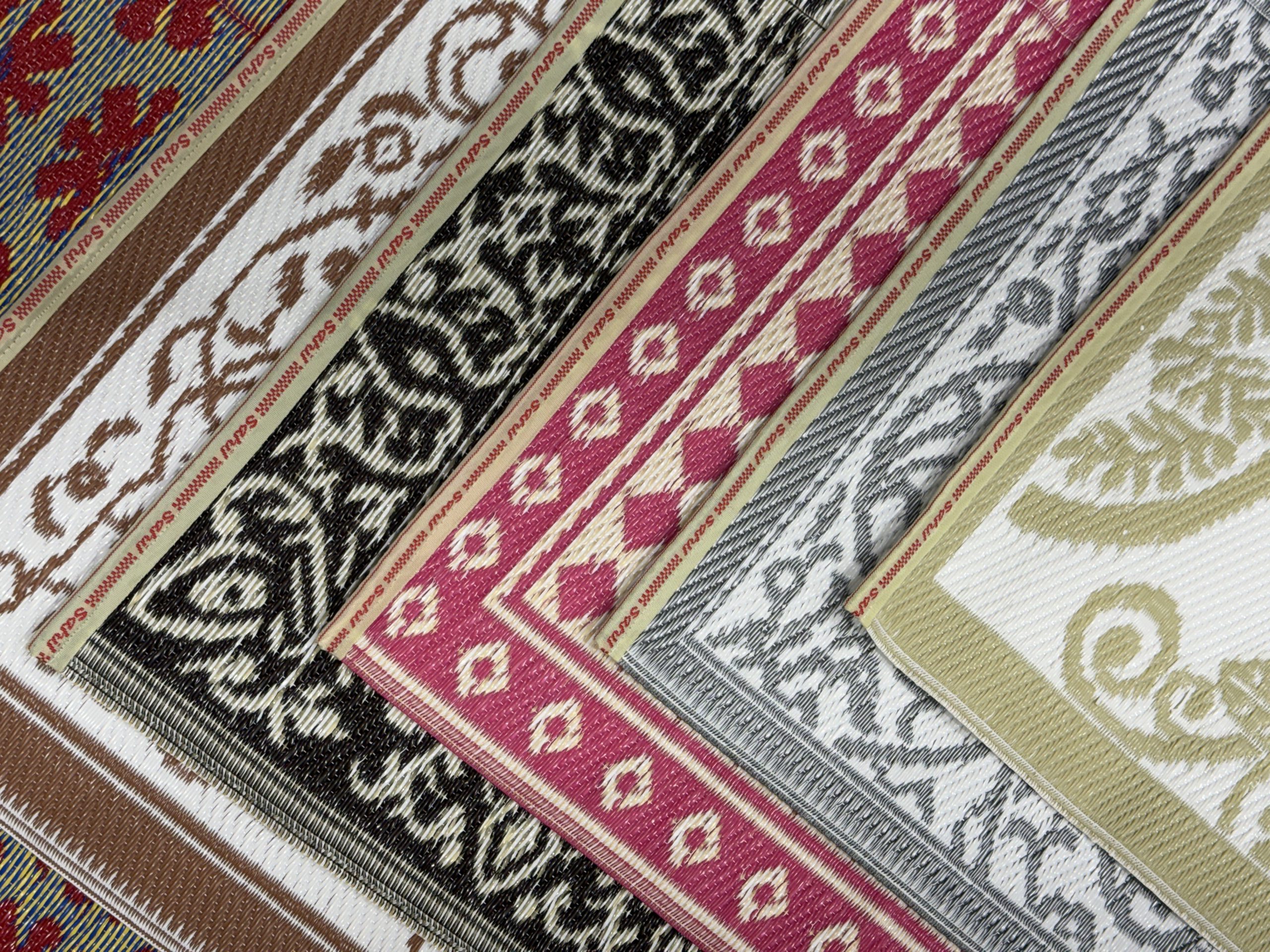
Next, manufacturers weave the polypropylene tapes on jacquard looms. This process creates different textures, patterns, and designs, including:
- Geometric designs
- Floral patterns
- Reversible mats
- Outdoor rugs
Cutting and Finishing
After weaving, workers cut the mats to size and seal or stitch the edges to prevent fraying. This process also helps the mats maintain their shape over time. In addition, inspection teams check each mat for colour consistency and weaving defects.
Why Manufacturing Quality Matters
Manufacturing quality directly affects mat performance. For example, premium mats offer better UV resistance, stronger weaving, and a longer lifespan. On the other hand, poor manufacturing can cause fading, rough texture, and weak edges. Therefore, manufacturers must maintain high production standards to ensure product quality.